
– By Team Jnyanam Innovative LearningⓇ
Learning Through Play: How Everyday Activities Shape a Child’s Mind
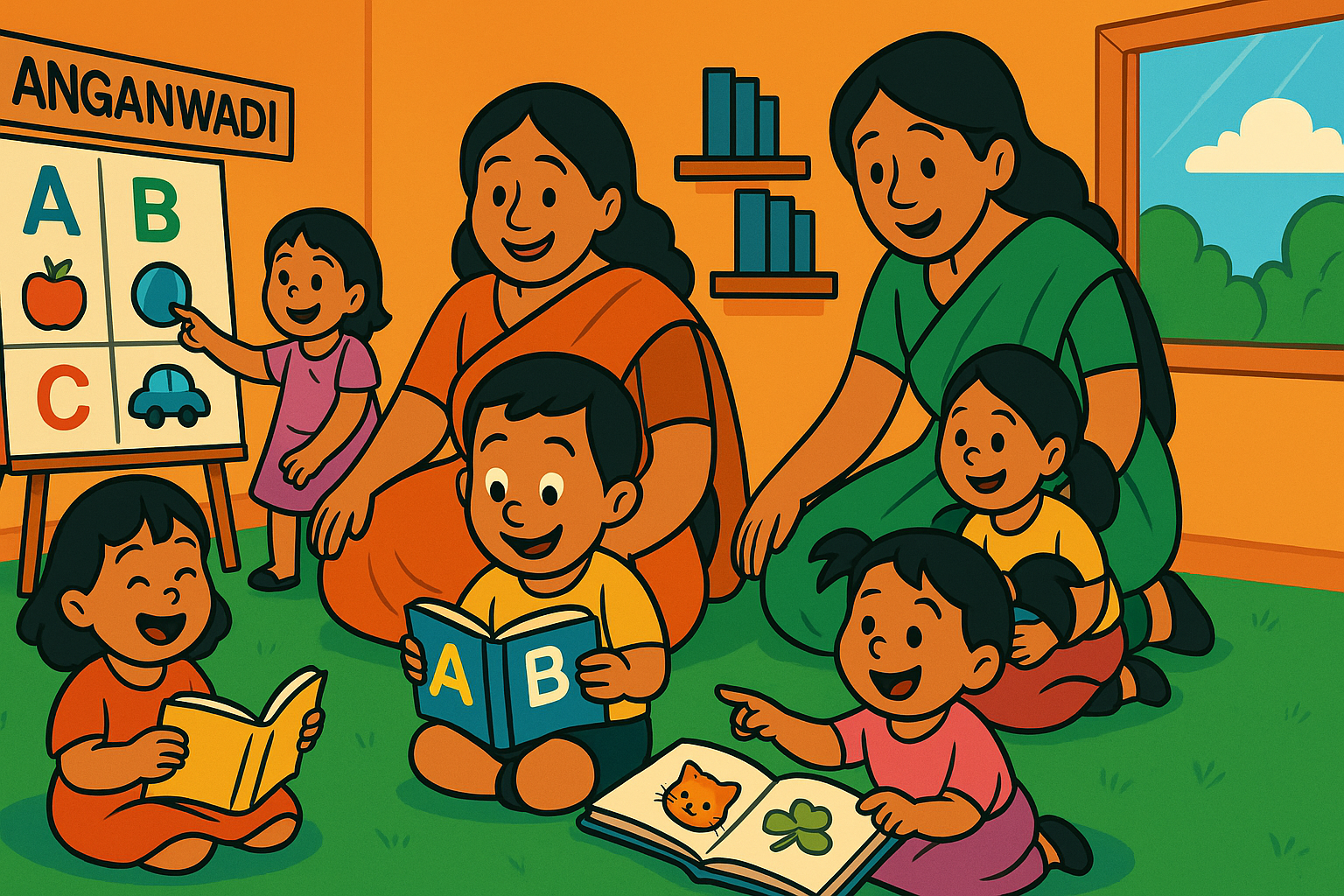
Children learn best not through pressure or memorization, but through play, observation, and everyday experiences. From early morning routines to bedtime stories, a child’s day is filled with natural learning moments. These simple activities play a powerful role in shaping their thinking, creativity, emotions, and life skills.
Learning through play allows children to explore the world in a way that feels joyful and meaningful. When learning becomes part of daily life, it stays with them longer and builds a strong foundation for future growth.
Why Play-Based Learning Is Essential
Play is not just entertainment—it is how children understand their surroundings. Through play, children develop problem-solving abilities, communication skills, emotional awareness, and confidence.
Unlike structured lessons, play allows children to learn at their own pace, encouraging curiosity instead of fear of mistakes. When children are allowed to play freely, they experiment, imagine, question, and discover—skills that are essential for lifelong learning.
Everyday Activities That Turn Into Learning Moments
Helping at Home
Simple household tasks such as arranging toys, folding clothes, or watering plants help children learn responsibility and independence. These activities also strengthen hand-eye coordination and teach the importance of routines and teamwork.
Cooking and Grocery Time
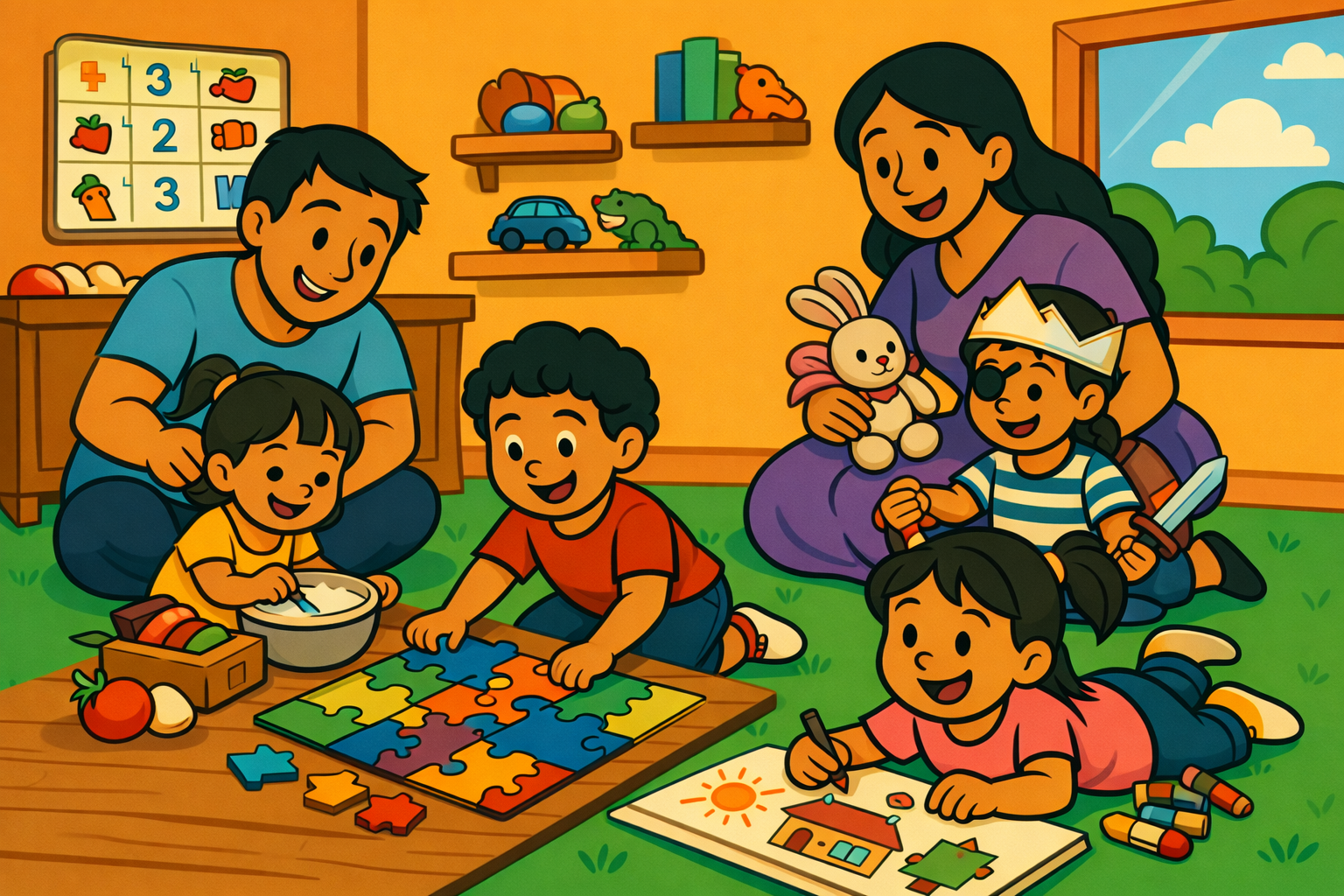
When children assist in the kitchen or during grocery shopping, they naturally learn counting, colors, food names, and healthy habits. Measuring ingredients or identifying fruits and vegetables turns daily chores into fun learning experiences.
Art, Drawing, and Storytelling
Creative activities allow children to express their thoughts and emotions. Drawing improves fine motor skills, while storytelling boosts imagination and language development. These activities help children communicate their feelings confidently.
Play-Based Games
Games such as puzzles, role-play, matching games, and sensory activities enhance memory, logical thinking, and patience. Through games, children learn to solve problems, take turns, and understand rules—important social skills for life.
Role of Parents and Educators
Parents and educators play a key role in supporting play-based learning. Encouraging children, asking questions about their activities, and participating without controlling helps children feel valued and confident.
Appreciating effort rather than perfection motivates children to explore and learn without fear. Limiting excessive screen time and providing real-world experiences allows children to engage with their environment more meaningfully.
Final Thought
Everyday life is a classroom, and play is a child’s natural language of learning. When children learn through daily experiences, they grow not only academically but also emotionally and socially.
By embracing learning through play, we nurture curious minds, creative thinkers, and confident individuals—ready to explore the world with joy.